
The benefits are simple. You save time, certainly. But the bigger benefit is you no longer have a monthly deadline to get your documents to your accountant – at least for all the documents that can be automated in this way. This reduces stress and eliminates minutiae from your day.
Accountants benefit too. No accountant likes to spend their time asking clients for documents over and over again. We know you have better things to do with your time, and we know you probably hate doing the paperwork. Receipt fetching is an easy way to get the job done. To take advantage of receipt fetching, the first step is to select a receipt-fetching app. Some of these apps do receipt fetching only, and others have many more functions. There are a multitude of apps available so please let us know if you’d like some recommendations - some can even be found on our Resources page. The second step is to determine which vendor accounts are supported, and to connect with them. Generally speaking, the connection is based on your account credentials, so if those change, the connection will need to be updated. When many of your documents can be pulled into one place, you don’t have to spend time logging into each vendor portal to pull receipts. If you’re curious about how to benefit from receipt fetching in your business, please feel free to contact us.
This is general information and should not be acted upon without first determining its application to your specific situation. Please contact us, your CPA or tax adviser for additional details.
Cost accounting. This type of accounting looks at the cost of items for sale. It’s especially useful in manufacturing, construction, or even restaurants where dozens or even hundreds of components are purchased and assembled to make the items that are for sale. Cost accountants account for and evaluate these costs to determine when they are too high or low and need to be repriced or purchased in a different way.
Cost accounting can be applied to small businesses to help them with pricing, determining break even points, controlling costs, and budgeting. Government accounting. Government accounting is simply accounting that’s done for government entities. Government accountants are concerned with maintaining government regulations as well as learning a different way of keeping books. Nonprofit accounting. Nonprofit accounting is unique to nonprofit organizations in that they often need to track and mark specific donations, manage grants and meet reporting requirements, fulfill public disclosures and reporting, and maintain a fund accounting process. Financial accounting. Financial accounting is the preparation of financial reports for external use and includes providing financial statements. Attest. Attest accounting is where a CPA goes through a process of verifying financial reports of a business to interested third-parties, such as banks and the public. The three main services in this area include compilations, reviews, and audits. Only a CPA can perform these services. Fraud or forensic accounting. A specialty role in accounting, forensic accountants can help a company that has been the victim of fraud. There are also services available to help reduce the possibility of fraud. Tax accounting. Tax accounting can be many things: the preparation of federal and state income tax returns for businesses, individuals, and other entities like estates and trusts; state and local tax assistance with collection, filing, remittance, and compliance; franchise tax support; and payroll tax collection, filing, and payment. There are more, but these are the big ones. Budgeting. Making a revenue and spending plan is an important accounting function. Internal auditing. Large companies have internal audit departments that maintain checks and balances for the company. In small companies, having someone in charge of monitoring internal controls would be the equivalent function. Accounting systems. Some accountants are technology-savvy, and this type of accountant can help solve technology issues, integrate accounting system modules, and streamline workflow. Fiduciary accounting. A fiduciary is someone legally responsible for financial responsibilities in an organization. Fiduciary accounting typically refers to accounting for trusts, but can have a much broader meaning. Public accounting. Public accounting is practiced by employees in a public accounting firm, which is one that serves many businesses with varying accounting needs. This is opposed to private or industry accounting where an accountant goes to work for one company in their accounting department. Public vs. industry accounting is really referring to an accountant’s career experience. Managerial accounting. This type of accounting focuses on internal numbers and how the organization can reach its goals. It’s broader than cost accounting, but there is an overlap. Accountants who serve in an advisory capacity to businesses will focus on this area. As you can see, there are many ways accounting can support your business success. Give us a call to discuss options for increasing the value you receive from your accounting services.
This is general information and should not be acted upon without first determining its application to your specific situation. Please contact us, your CPA or tax adviser for additional details.
Tracking data is then entered into a system where data is kept about the item. A simple system may be a spreadsheet.
There are also software apps more sophisticated than spreadsheets that track all of the fixed assets for a company, including original cost, depreciation method and history, and tax treatment. You never know how many of an item you might have until you record and count them. How many computers (and computer parts) do you have lying around your office? Extra desks and chairs? Maybe you even have extra office space or extra land. Part of being a great entrepreneur is fully utilizing all the resources you have at your disposal. Where can you put to better use the extra assets you have? Could you sell the surplus items? Or donate them for a write-off? Do you have extra room to rent out to a tenant, earning rent? Sometimes we’re so focused on operating the core of our business that we don’t see what else is a money maker right in front of us. In addition to focusing on income and expenses from operations, consider the resources you have in your fixed assets. For assistance with developing or reviewing your a fixed assets schedule, please give us a call. And if you do sell some of your fixed assets, be sure to contact us so we can help you book the transactions properly.
This is general information and should not be acted upon without first determining its application to your specific situation. Please contact us, your CPA or tax advisor for additional details.
This is general information and should not be acted upon without first determining its application to your specific situation. Please contact us, your CPA or tax advisor for additional details.

The products and services your business sells make it unique. The same thing is true of how these items are set up in your accounting software. Whether you’re using QuickBooks Online or something else, getting your products and services set up right can impact the quality of the information you can get out of your accounting system.
Here are the types of items you can set up in most systems. Inventory Items Inventory items are used in retail and wholesale businesses. They are physical items that the system can keep count of for you. You can purchase or make the items, and the associated cost is usually tracked when a shipping receipt or bill is entered. They are sold when a sale is made and an invoice or sales receipt is entered. Transactions using inventory items impact a lot of accounts on both the balance sheet (cash, accounts payable, accounts receivable, and inventory) as well as the income statement (cost of goods sold, sales, and returns). The inventory item can be tied to default sales and purchase accounts in most systems. Non-Inventory Items QuickBooks offers a type of item called a non-inventory item. There’s a big difference in that non-inventory items do not have quantities associated with them. They don’t increase or decrease the inventory account. But they can be tied to default sales and purchase accounts like inventory items above. Examples of non-inventory items include items purchased for a specific job, such as a contractor purchasing appliances for a custom home, items you sell but do not buy, such as an e-book or other digital product, and items you purchase but do not sell, such as shopping bags. Service Items A service item is a special type of non-inventory item. There are no quantities, which makes sense because services are not physical items. They also are only connected to a sales account and not a purchase account. With service items, you could set up service packages or hourly rates. Bundles A bundled item is a group of items that were designed to be sold together. For example, if you sell a gift basket of coffee products, you would bundle the items used to create the basket. Assembly Items An assembly item is a special type of inventory item where the quantity is tracked, but it differs from an inventory item in that it can’t be sold separately because it is a component and not a whole item. Assembly items are available in larger accounting and inventory apps, such as QuickBooks Enterprise, and are used in conjunction with a Bill of Materials or other build feature. An example is a set of shelves. The assembly components are the individual shelves and the frame pieces that you may want to keep counts of. An inventory item that contains the shelves, the frames, and other parts is “built” from the assembly items. The nuts and bolts could be non-inventory items or assembly items, depending on whether you wan to keep count of them or not. Sales Tax Item Sales tax is a very special type of item used on an invoice or sales receipt to calculate sales tax due on the order. In many accounting systems, it’s usually kept in a separate list from the other product and service items. Rates can be entered for each sales tax jurisdiction. Other Items Some systems have an “other” category to capture items such as freight, shipping, handling, and other add-ons to the sale. Tracking Profitability Setting up the right type of products and services is critical to matching costs and revenue for accurate insights into gross margin. This section of your accounting system is also the one that’s most different from industry to industry and company to company. For best results when setting up Products & Services, be sure you get professional help from experts who know both the software and your industry for best results. Contact us to find out how we can assist you!
This is general information and should not be acted upon without first determining its application to your specific situation. Please contact us, your CPA or tax advisor for additional details.

In response to the 2018 Wayfair decision by the Supreme Court, at least 30 states have instituted new regulations related to sales tax collection by remote sellers. Will your business be affected?
Check out this article to learn more about California's adoption of economic nexus. Check state nexus requirements here. Please feel free to reach out to us for assistance if you find yourself facing economic nexus challenges.
This is general information and should not be acted upon without first determining its application to your specific situation. Please contact your CPA or tax advisor for additional details.
Revenue
The report starts by listing the revenue for the period of time covered. Revenue includes all sources of income, including sales from operations, interest and investment income, revenue from insurance claims, sales from assets or other parts of the business, and any other source of revenue. In most small businesses, sales will be the largest part of the revenue, if not all of it. In some countries, the term used for sales is turnover. If you sell more than one item or have more than one location, it might be a good idea to be able to view the sales detail from these categories. This may or may not be on your income statement depending on how formal it is, but you should be able to get a drill down report on your sales detail. Look for exceptions to what you expect to see. There can be some decisions you can make and actions you can take from the insights you discover. Cost of Goods Sold This section of the income statement includes costs you incur directly on items you sell. If you maintain an inventory, it’s the cost you paid for the inventory items that you sold during the period. If your business is a manufacturer, cost of goods sold, or COGS, will include costs of materials and labor to produce the items. If you own a service business, COGS will typically be zero. As a service business, you may incur direct costs when providing services, and these costs can be booked in a variety of expense accounts, including supplies. Gross Profit Some income statement formats will include a gross profit number which is sales minus cost of goods sold. This number is important for businesses with inventory. Expenses The expenses section of the income statement is the longest part. It includes all of the expenses you incurred in your business, including advertising and marketing, rent, telephone, and utilities, office supplies and meeting expenses, travel, meals, and entertainment, payroll and payroll taxes, and several more. You might also hear the term overhead. Overhead is a subset of expenses that have to be met whether you sell zero items or millions. They include items like rent and utilities, management payroll, and office supplies. To review your expenses, check line by line to see if anything looks out of sorts, and take the appropriate action. Net Profit or Loss The final number on your income statement represents whether you made or lost money in the period the report covers. The formula is simple: revenue less COGS less expenses equals net profit or loss. Net profit/loss can go by many names, depending on the size of your business and your accountant’s vernacular. You may also see EBITDA: Earnings before interest, taxes, depreciation, and amortization. Earnings is another word for net profit. Perspective It’s a good idea to compare your income statement numbers to other periods in your business. Common comparisons include last period, last several periods, and same period last year. It’s also a great idea to have a budget that sets goals for your income statement numbers. Then you can compare budget to actual numbers and take action on the variances. If your business falls into a standard type of business, you may also be able to see how it is doing compared to others in your industry. This is called benchmarking, and the income statement is a very common format that’s used in benchmarking. Do spend some time each period reviewing your business’s income statement. It can help you make a faster course correction in your business so you can be even more successful than you already are. Remember, though, that the Income Statement will only report based on the accuracy of data entered. For assistance with ensuring your books are accurate, please contact us. We offer many solutions to support business success through accurate financial reporting.
This is general information and should not be acted upon without first determining its application to your specific situation. Please contact your CPA or tax advisor for additional details.
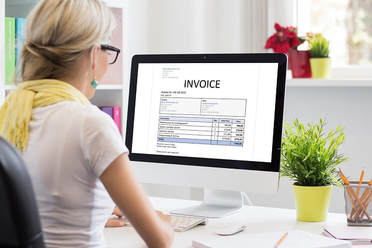
When it comes to marketing, the company invoice might be the last thing you’d think about. But think again: it’s a great place to make every attempt to get paid faster and have your customer coming back for more services and products. Here are five fun easy-to-implement ideas to add to your invoices:
A simple “Thank you for your business” or a “We appreciate your business” is a nice added touch on the bottom of every invoice. QuickBooks invoices include a comment line where you can choose your comment or write one for yourself. You can also customize the form so that it appears on every invoice.
A customer that just purchased from you now trusts you; it’s the perfect time to let them know what else you have available that they could benefit from. Your offer could be a small amount off their invoice for referrals they send you, your monthly special, a sale item, or an item related to what they purchased. Just add a quick text line to your invoice letting them know the special and where to call for more information. If you haven’t ever tried this, you will be surprised and delighted at the results.
Most invoices include terms, but you can make it even easier on your client by computing their specific due date. If possible, include the due date on your invoice so the customer can see clearly when they need to pay you. Make the due date stand out, too. Bold it, print it in a different color, increase the font, or do all of the above. You want it to be really clear when that payment is due in your office.
Can you take payments online? If so, include the web link that customers can use to pay you online. If it’s convenient for your client to pay, you’ll get paid faster. (For a great QuickBooks integrated online payment option, please contact us.)
If all the above fails and the customer does not pay you by the invoice’s due date, you’ll want to have a process for re-sending the invoice and/or statement until the customer pays or until you’re ready to turn it over to a collections agency. Here are some sample sentences you can choose from:
When the invoice gets older, sometimes it helps to add a little humor:
Marketing to Get Paid With these five low-cost ideas, you’re “marketing” to get the payment sooner. They are easy to implement, cost very little, and will improve your cash flow. Try them and let us know how they are working.
This is general information and should not be acted upon without first determining its application to your specific situation. Please contact your CPA or tax advisor for additional details.
Income Taxes
Everyone knows about the April 15th deadline to file your taxes. Some people file an extension and have until October 15th. However, we need to remember that the best estimate of your tax liability needs to be paid by April 15th even if an extension is granted. Failure to correctly estimate and pay income taxes leads to a penalty that is calculated by multiplying the number of days the tax is late by the effective interest rate. Paying Vendors If we’re slow to make our accounts payable payments, our vendors may tack on a penalty, but the larger consequence is the effect on our credit score. A damaged credit score will create a ripple effect that impacts many other areas of your business. Business Goals It’s so easy to let internal deadlines slide, but they may be the most important of them all. To move your business forward, set goals with deadlines so that you can measure your results. 
Mastering Deadlines
Here are a couple of tips to master your deadlines so you can avoid the above consequences:
If financial tracking or incomplete record keeping is impacting your ability to meet deadlines, give us a call. We can offer suggestions and recommendations for options to support your needs.
This is general information and should not be acted upon without first determining its application to your specific situation. Please contact your CPA or tax advisor for additional details.
Easy mileage tracking? That's hard to believe.
One of the biggest deduction challenges can be proper mileage tracking. But the benefits can pay off - depending on your situation, you may be able to take deductions for business, medical and/or charitable purposes. One way to simplify your mileage tracking is to use a mileage tracking app, such as MileIQ. (Check our our Resources page for a discount on an annual unlimited drive subscription with MileIQ.) The new tax law changes have affected the ability for some to take advantage of the mileage deduction. For a quick overview of changes, check out this blog post. |
AuthorSuccessfully meeting the challenges inherent to new and smaller businesses provides me with a special type of satisfaction. Archives
February 2022
Categories
All
|




 RSS Feed
A Clarity Consulting Group Company

|
|
|

|

|

|

|

|